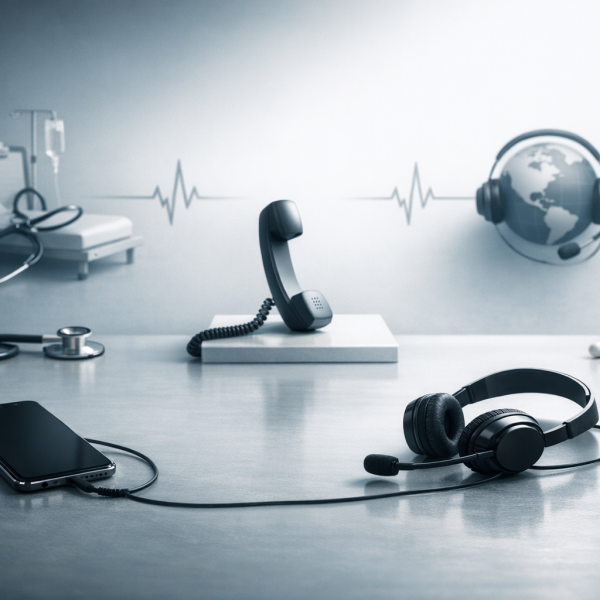
Language barriers can slow down patient care, frustrate staff, and create serious clinical risks. Phone interpreting offers a fast, reliable, and compliant way for clinics to communicate clearly with patients in any language. By connecting staff with professional interpreters in seconds, clinics can streamline workflows, improve patient satisfaction, and reduce costly errors that come from miscommunication.
1. Faster Patient Intake and Registration
Front-desk teams often struggle when patients arrive speaking limited English. Without immediate language support, simple tasks like confirming demographics, updating insurance, or explaining consent forms can take far too long.
Phone interpreting eliminates this bottleneck. Staff can dial in, select the language, and have a qualified interpreter on the line to guide the conversation. This results in:
- Shorter check-in times for non-English-speaking patients
- Fewer registration errors and incomplete forms
- Smoother patient flow from waiting room to exam room
When intake runs efficiently, the entire clinic schedule benefits, leading to better time management and less stress on administrative staff.
2. Seamless Integration with Translation Technology
Modern clinics are increasingly combining human language support with digital tools to maximize efficiency. Phone interpreting works especially well alongside secure clinic platforms and dedicated language solutions like translation software. Together, they create a comprehensive communication ecosystem that supports both real-time conversations and written content such as patient instructions, follow-up messages, and educational materials.
By integrating phone interpreting with digital workflows, clinics can standardize language support across departments, reduce manual work, and keep communication consistent and compliant.
3. More Efficient Clinical Consultations
In-person interpreters are valuable, but they are not always available when appointments run late, schedules change, or walk-ins appear. Phone interpreting solves this challenge by providing on-demand language access for any consultation, regardless of time or location.
Clinicians can:
- Quickly clarify symptoms and medical histories
- Explain diagnoses and treatment options in detail
- Confirm patient understanding without guesswork
This leads to more accurate assessments, fewer repeated visits due to confusion, and more efficient use of appointment slots.
4. Reduced Appointment No-Shows and Cancellations
Patients who do not fully understand appointment reminders, preparation instructions, or follow-up requirements are more likely to miss visits or arrive unprepared. Phone interpreting helps staff reach out to patients in their preferred language, ensuring that critical details are clearly communicated.
With effective language support, clinics can:
- Improve appointment adherence by clearly explaining dates and times
- Reduce last-minute cancellations due to misunderstandings
- Ensure patients follow pre-visit instructions, such as fasting or medication adjustments
Lowering no-shows directly boosts clinic efficiency and revenue, while also improving continuity of care.
5. Better Use of Clinical Staff Time
Nurses, medical assistants, and front-desk staff often rely on bilingual coworkers or family members to interpret. This approach is not only risky from a compliance standpoint; it also pulls staff away from their primary duties.
By using phone interpreting, clinics free up staff time for higher-value clinical tasks. Instead of waiting for a specific bilingual team member, any staff person can immediately access professional language support. This helps clinics:
- Keep workflows consistent across shifts and locations
- Reduce interruptions and time spent coordinating ad-hoc interpreting
- Maintain productivity even during busy or understaffed periods
6. Enhanced Patient Safety and Compliance
Miscommunication in healthcare can lead to medication errors, incomplete consent, and avoidable complications. Phone interpreting provides a compliant way to ensure that patients truly understand their care plans.
Clinics that invest in reliable interpreting support can:
- Document that language assistance was offered and used
- Strengthen informed consent by clearly explaining risks and benefits
- Reduce liability linked to misunderstandings or inaccurate interpretation
This not only improves safety, but also aligns with legal and regulatory expectations around equitable access to care.
7. Improved Patient Satisfaction and Trust
Patients who feel heard and understood are more likely to trust their providers and follow medical advice. Phone interpreting allows clinicians to speak directly to patients in their own language through a trained interpreter who respects cultural nuances.
Over time, this builds stronger patient relationships, higher satisfaction scores, and better community reputation. For clinics serving diverse populations, this can be a powerful differentiator in a competitive healthcare landscape.
8. Consistent Support Across Multiple Locations
Larger clinic networks often struggle to provide consistent language access at each site. Hiring on-site interpreters for every language at every location is simply not practical.
Phone interpreting solves this by offering a centralized, scalable solution. Any clinic in the network can dial in for language support, ensuring the same high standard of communication regardless of location. This consistency supports standardized protocols, easier staff training, and smoother coordination when patients move between sites.
Conclusion: Phone Interpreting as a Strategic Efficiency Tool
Phone interpreting is far more than a convenience for non-English-speaking patients. It is a strategic tool that helps clinics run more efficiently, from the front desk to the exam room and beyond. By enabling faster intake, clearer consultations, better adherence, and safer care, phone interpreting directly supports clinic performance and patient outcomes.
Clinics that pair on-demand phone interpreting with robust language technology can create a powerful, scalable communication framework. The result is a more efficient operation, a more inclusive patient experience, and a stronger foundation for long-term growth in an increasingly diverse healthcare environment.